
Build a Healthy Relationship With Food | SendSlim
- Home
- Build a Healthy Relationship With Food | SendSlim
Build a Healthy Relationship With Food | SendSlim
What Does a Healthy Relationship With Food Really Mean?
Many people think a healthy relationship with food means eating perfectly all the time. But that is not quite right. A healthy relationship with food means you can enjoy eating without guilt, fear, or stress. It means food does not control your emotions or your daily life. You eat when you are hungry, you stop when you are full, and you do not punish yourself for enjoying a treat now and then.
For many people, this kind of balance is hard to find. Diet culture, social media, and years of on-and-off dieting can make food feel like the enemy. Learning to see food in a new, healthier way takes time and practice. But the good news is that it is something anyone can work toward, one small step at a time.
Building a better relationship with food is also one of the most important parts of long-term weight management. When eating feels peaceful instead of stressful, healthy choices become easier to make and stick with over time.
Understanding Emotional Eating
Emotional eating means turning to food for comfort when you are sad, stressed, bored, or anxious — not because your body is physically hungry. It is very common. Many people reach for chips, sweets, or other comfort foods when they are going through a hard time. The problem is that emotional eating does not fix the feeling that caused it. It often leads to guilt, which then makes the emotional stress even worse.
Learning to tell the difference between physical hunger and emotional hunger is a key skill. Physical hunger builds slowly, and almost any food sounds good. Emotional hunger usually comes on fast, and you crave something very specific, like ice cream or pizza. Emotional hunger also tends to come with feelings of guilt after eating.
Once you can spot emotional eating, you can start finding other ways to handle hard feelings. Going for a walk, calling a friend, journaling, or even just taking a few deep breaths can help. Over time, these habits can replace the urge to eat for emotional reasons.
The Problem With Labeling Foods as “Good” or “Bad”
One of the biggest roadblocks to a healthy relationship with food is thinking of certain foods as completely off-limits. When you tell yourself you can never eat a certain food, it often makes you want that food even more. This can lead to a cycle of restriction followed by overeating, which can be hard on both your body and your mindset.
Research shows that labeling foods as forbidden can increase cravings and make it harder to eat in a balanced way. A more helpful approach is to think about food in terms of how often and how much. Some foods nourish your body every day. Others are best enjoyed as occasional treats. Neither label makes a food “bad” — it is all about balance and pattern over time.
Giving yourself permission to enjoy all foods, in appropriate amounts, takes away the power that “forbidden” foods can have over you. This mindset shift is a cornerstone of intuitive eating, an approach supported by nutrition researchers that focuses on listening to your body’s natural hunger and fullness signals.
Mindful Eating: Slowing Down and Paying Attention
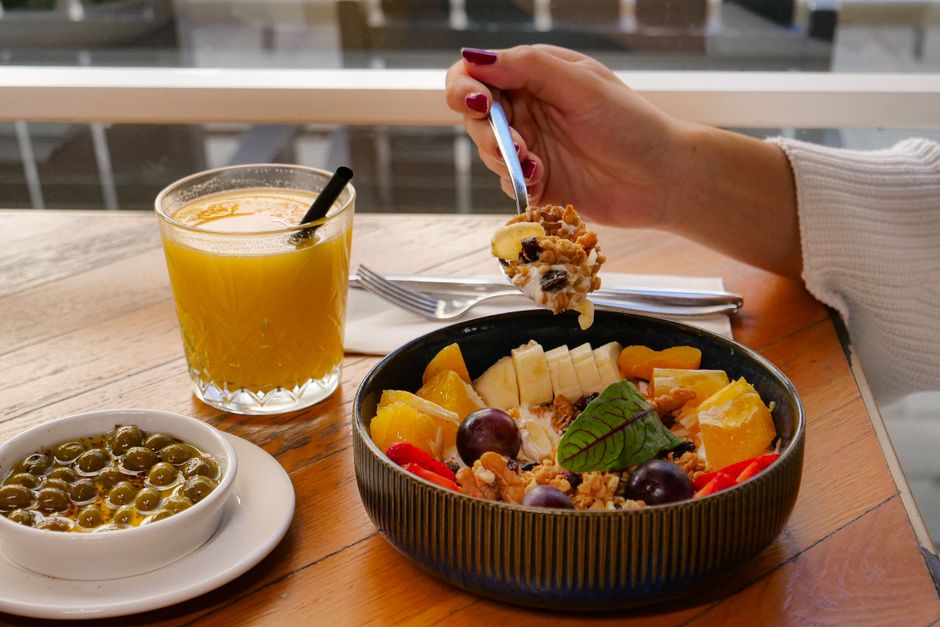
Mindful eating is the practice of paying full attention to your food while you eat. That means no scrolling through your phone, no eating in front of the TV, and no rushing through meals. When you slow down and focus on what you are eating, you notice flavors, textures, and when you start to feel full. This helps you enjoy your food more and eat less without feeling deprived.
Studies have found that mindful eating can help reduce overeating and improve feelings of satisfaction after meals. It can also help with emotional eating by helping you pause and check in with yourself before reaching for food. Ask yourself: Am I actually hungry right now, or am I eating for another reason?
Practicing mindful eating does not have to be complicated. Start by putting your fork down between bites. Chew slowly. Take a moment before eating to look at your food and notice how it smells. Small changes like these can make a real difference in how you relate to food over time.
How Nutrition Supports Your Goals Without Feeling Like a Diet
Eating for your health does not have to feel like punishment. When you shift the focus from what you cannot eat to what you can add to your plate, food starts to feel like fuel and pleasure rather than a source of stress. Adding more vegetables, lean proteins, whole grains, and healthy fats gives your body what it needs to feel energized and satisfied.
Eating regular meals throughout the day also helps keep your hunger and blood sugar levels steady. Skipping meals often leads to intense hunger later, which can make it harder to make thoughtful choices. Planning simple, satisfying meals in advance can reduce the likelihood of reaching for fast options that may not align with your goals.
If you are working on your weight and are not sure where to start with nutrition, speaking with a medical professional can help. Services like SendSlim offer affordable video and phone visits with licensed clinicians in California and Nevada, so you can get personalized guidance for just $50 per visit — no insurance required.
Making Peace With Food for the Long Term
Building a healthy relationship with food is not about being perfect. It is about making progress. You will have days where you overeat or reach for comfort food, and that is okay. What matters is that you do not let one off day turn into a week of giving up. Each meal is a fresh start.
Surrounding yourself with supportive people, limiting exposure to extreme diet culture messages, and practicing self-compassion all play a role in how you feel about food. Progress looks different for everyone, and small positive changes add up over time.
If you feel like your relationship with food is affecting your weight or your overall well-being, reaching out for professional support is a smart step. SendSlim connects you with licensed medical providers who can help you create a realistic, sustainable plan — on your schedule and at a price that works for you.
Conclusion
A healthy relationship with food is built on balance, self-awareness, and kindness toward yourself. By understanding emotional eating, letting go of food rules, practicing mindful eating, and focusing on nourishment rather than restriction, you can create a way of eating that feels good — and lasts. It takes time, but every small step you take brings you closer to lasting change.
References
- Tribole, Evelyn, and Elyse Resch. “Intuitive Eating: A Revolutionary Anti-Diet Approach.” Journal of the Academy of Nutrition and Dietetics. 2020.
- Dalen, Jeanne, et al. “Pilot Study: Mindful Eating and Living (MEAL): Weight, Eating Behavior, and Psychological Outcomes Associated With a Mindfulness-Based Intervention for People With Obesity.” Complementary Therapies in Medicine. 2010.
- Polivy, Janet, and C. Peter Herman. “Distress and Eating: Why Do Dieters Overeat?” International Journal of Eating Disorders. 1999.
- National Institute of Diabetes and Digestive and Kidney Diseases. “Choosing a Safe and Successful Weight-Loss Program.” National Institutes of Health. 2021.
- Tylka, Tracy L. “Development and Psychometric Evaluation of a Measure of Intuitive Eating.” Journal of Counseling Psychology. 2006.
Ready to start your medical weight loss journey?
Talk to a licensed clinician by phone or video — from anywhere in California or Nevada. No waiting room. No insurance needed. Just $50 per visit.
Individual results vary. Medication is only prescribed when clinically appropriate.
- Share
